
UoN hosted the IDEAS Network Early Career Researchers Training on Feminist Macroeconomics
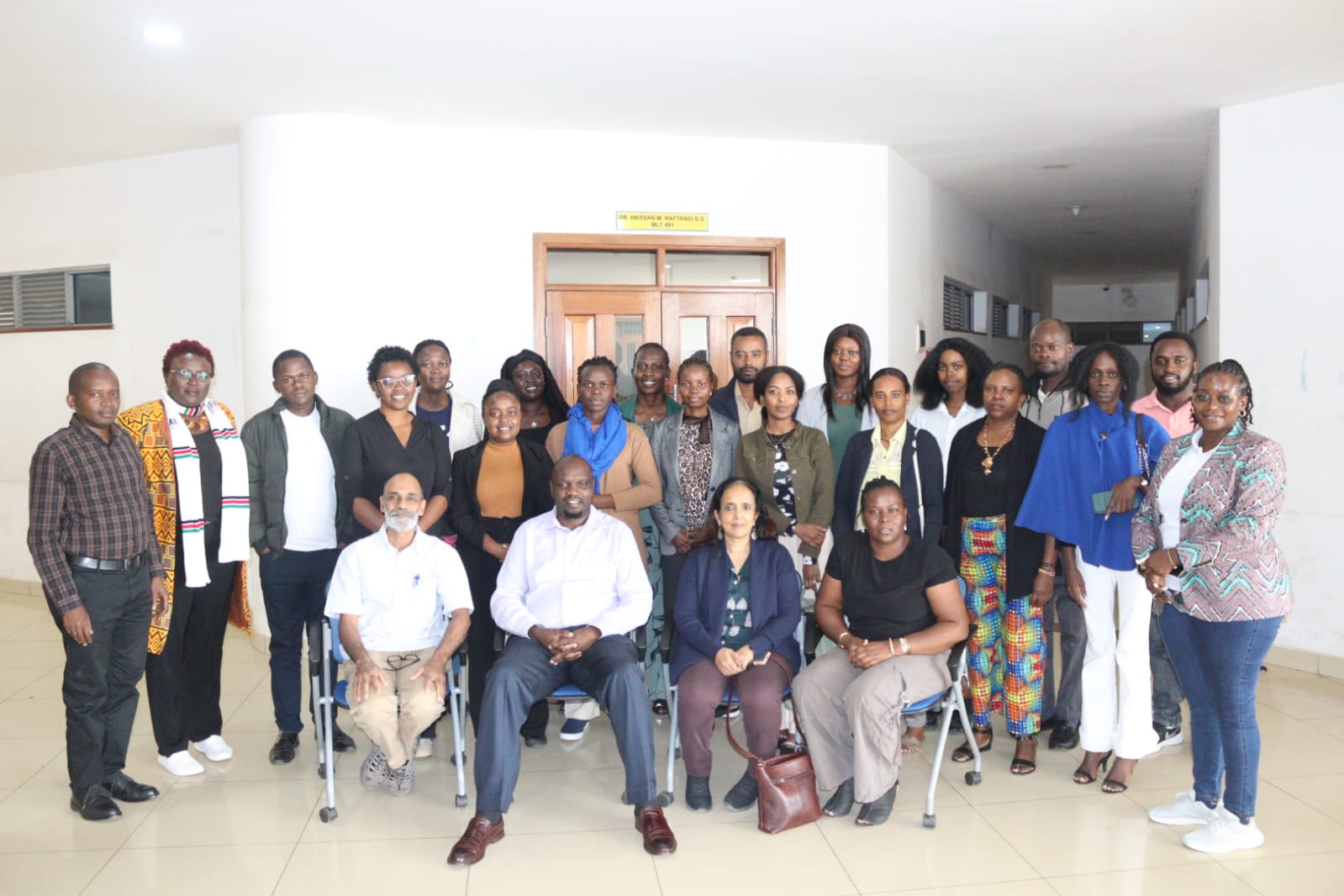
Department of Economics and IDEAS Network Early Career Researchers Training
The University of Nairobi, Department of Economics and the IDEAS Network hosted an early-career researchers training on Feminist Macroeconomics. The three-day workshop was held on 13th to 15th May, 2026 at the University of Nairobi. The participants were drawn from East Africa.
The sub-themes discussed for those three days were; Pillars of feminist economics, Fiscal and Monetary Policy, Social Reproduction and Care, and Trade and Gender.
The conversation on feminist economics unfolded as more than just an academic engagement; it became a moment of reflection on how Africa understands its economies, its histories, and its people.
The three-day workshop began with a keynote lecture titled “Feminist Macroeconomics: Setting the Stage”. The Lecture was delivered by Prof. Sumangala Damodaran, Professor, Institute for Human Development, New Delhi.
The session introduced students, scholars, and practitioners to feminist macroeconomics as a framework that challenges traditional economic thinking, rather than treating gender as a biological reality alone, the discussion explored gender as a social construct shaped by systems of power, patriarchy, class, race, caste, and ethnicity.
Throughout the lecture, Prof. Damodaran emphasized that economies cannot be fully understood through narrow neoclassical approaches that ignore lived realities. Drawing from the pioneering work of Ester Boserup, she revisited the long-standing inequalities women continue to face in employment, access to resources, time allocation, and income. She argued that feminist economics matters because it reveals how patriarchal and racialized capitalism determines what is considered “suitable labour,” while reinforcing stereotypes such as the idea of women possessing “nimble fingers” suited for undervalued work.
The engagement also highlighted the importance of intersectionality , the understanding that economic experiences are shaped simultaneously by gender, race, caste, class, ethnicity, and other systems of domination. Speakers noted that inequality cannot be examined in isolation because these structures continuously interact to shape opportunities, labour, and social outcomes.
Prof. Tabitha Ng’ang’a and Dr. Owen, from the Department of Economics were among the other International facilitators that delivered sessions during the workshop.
Day 1 ended with a public panel discussion on ‘Why Feminist Macroeconomics matter in Africa’
Beyond the academic dialogue, the workshop marked a major milestone for the Department of Economics and International Development Economics Associates (IDEAs) with the announcement of a five-year collaborative partnership. The agreement will focus on teacher capacity building, curriculum development, conferences at regional and national levels, a Department of Trading Course, and other jointly agreed academic initiatives aimed at strengthening research and policy dialogue in gender and economics.
Prof. Jack Odhiambo, Dean, Faculty of Arts and Social Sciences read a speech on behalf of the University Vice Chancellor Prof Margaret Jesang that was in full support of the discussion and promised to collaborate and work on introducing a course under the Department of Economics that centered on Feminist Economics.
The atmosphere reflected a growing recognition that Africa’s economic future cannot be separated from questions of gender, history, labour, and power. Speakers challenged shallow notions of “empowerment” and instead called for deeper examinations of how economic systems are shaped by colonial legacies, patriarchy, race, caste, and class relations.
By the end of the day, it was clear that the lecture, the partnership agreement, and the evening dialogue were all connected parts of a larger vision: creating spaces where economic thought becomes more inclusive, more critical, and more reflective of the realities shaping African societies today.

